Pool Resurfacing Guide: When, How, and How Much It Costs
Everything you need to know about pool resurfacing in Central Florida, from recognizing the signs to understanding your options and costs.
Pool Resurfacing Guide: When, How, and How Much It Costs
Pool resurfacing is one of the most significant investments in pool maintenance, but it's essential for maintaining your pool's integrity, appearance, and safety. This comprehensive guide covers everything Central Florida pool owners need to know about resurfacing.
What is Pool Resurfacing?
Pool resurfacing involves removing and replacing the interior finish of your pool—the waterproof layer that seals the pool structure and provides the smooth surface you see and feel.
The most common pool finishes include:
- Plaster (traditional white or colored)
- Exposed aggregate (pebble finishes)
- Quartz finishes
- Tile
Signs Your Pool Needs Resurfacing
Visible Surface Damage
- Cracks in the plaster or finish
- Rough, abrasive texture
- Exposed gunite or concrete showing through
- Chips or missing pieces of finish
Staining and Discoloration
- Persistent stains that won't clean
- Widespread discoloration
- Dark or mottled appearance
- Algae that quickly returns despite chemical treatment
Surface Texture Issues
- Rough areas that scratch skin
- Abraded or worn-down surface
- Sandpaper-like feeling in high-traffic areas
Water Chemistry Problems
- Difficulty maintaining balanced chemistry
- Constant need for chemical adjustments
- Water that turns cloudy shortly after treatment
Age of Current Surface
- Plaster surfaces typically last 10-15 years
- Aggregate finishes last 15-20 years
- Older than these ranges usually means resurfacing soon
The Resurfacing Process
1. Draining the Pool
The pool is completely drained, typically taking 8-12 hours. Timing is critical—never drain a pool during heavy rain or high water table conditions.
2. Surface Preparation
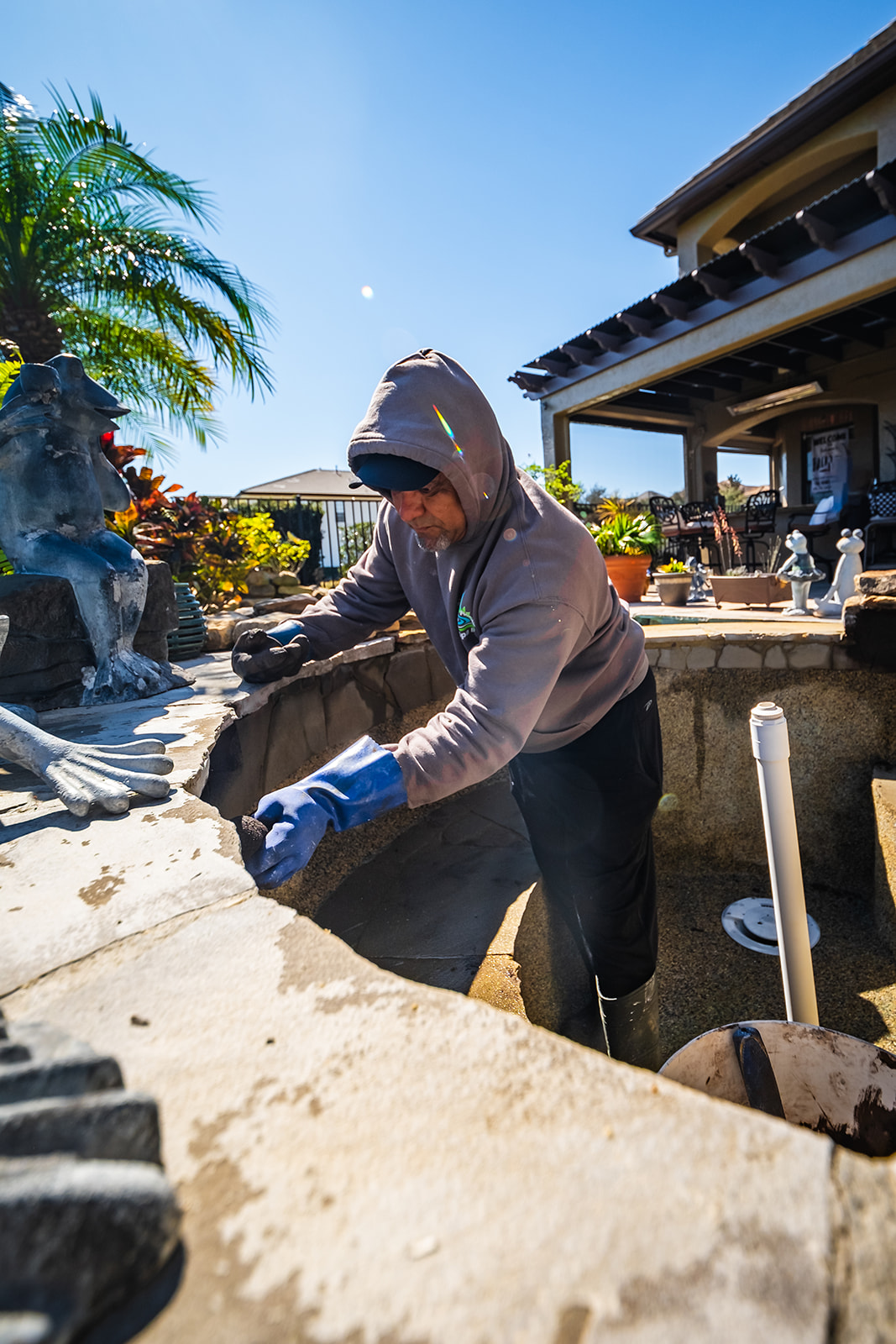
- Remove the old surface using chipping hammers, grinders, or sandblasting
- Repair any structural cracks or damage to the underlying gunite
- Clean thoroughly to ensure proper adhesion
- Acid wash if necessary
3. Bond Coat Application
A bonding agent is applied to ensure the new surface adheres properly to the pool shell.
4. New Surface Application
- Plaster: Mixed on-site and troweled by hand onto the pool interior
- Aggregate finishes: Installed similarly to plaster, then exposed by acid washing
- Tile: Set with thin-set mortar and grouted
5. Filling and Startup
- Pool is filled with water (usually 12-24 hours)
- Startup chemicals added
- Brushing schedule begins immediately
6. Curing Process
- First 28 days are critical for proper curing
- Specific water chemistry requirements during curing
- Daily brushing for the first week
- Careful chemical monitoring
Resurfacing Options and Costs
Standard White Plaster
Description: Traditional, smooth finish that's been used for decades.
Pros:
- Most affordable option
- Smooth feel
- Bright, clean appearance when new
- Easy to repair
Cons:
- Shortest lifespan (10-15 years)
- Prone to staining
- Can become rough over time
- Requires most frequent maintenance
Cost: $3-$6 per square foot Average Pool (600 sq ft): $1,800-$3,600
Colored Plaster
Description: Same as white plaster but with added pigments for color.
Pros:
- All benefits of white plaster
- Variety of color choices
- Can enhance water appearance
Cons:
- Slightly shorter lifespan than white
- Color fades over time
- More expensive than white plaster
Cost: $4-$8 per square foot Average Pool: $2,400-$4,800
Exposed Aggregate (Pebble)
Description: Small pebbles or glass beads mixed into plaster, then exposed through acid washing.
Pros:
- Long-lasting (15-20 years)
- Highly durable
- Stain-resistant
- Unique, natural appearance
- Slip-resistant texture
Cons:
- Rougher texture
- More expensive
- Harder to vacuum and brush
- Can trap debris
Cost: $8-$15 per square foot Average Pool: $4,800-$9,000
Quartz Finishes
Description: Crushed quartz blended into plaster for a smooth, durable finish.
Pros:
- More durable than standard plaster (12-18 years)
- Smoother than pebble
- Stain-resistant
- Consistent appearance
- Various color options
Cons:
- More expensive than plaster
- Can still develop surface issues
- Limited color selection compared to pebbles
Cost: $6-$12 per square foot Average Pool: $3,600-$7,200
Tile
Description: Pool-grade ceramic, porcelain, or glass tiles.
Pros:
- Longest lifespan (20+ years)
- Easiest to clean
- Most customizable
- Won't stain or fade
- Smooth, elegant appearance
Cons:
- Most expensive option
- Individual tiles can crack
- Grout lines require maintenance
- Cold feel compared to other finishes
Cost: $15-$50+ per square foot Average Pool: $9,000-$30,000+
Factors Affecting Resurfacing Cost
Pool Size
Larger pools cost more due to material and labor requirements.
Surface Type
Premium finishes cost significantly more than basic plaster.
Pool Condition
Structural repairs, crack sealing, or extensive prep work add to costs.
Access
Difficult access (narrow gates, limited space) increases labor costs.
Location
Costs vary across Central Florida based on local labor rates and competition.
Tile Work
Replacing waterline tile adds $10-$40 per linear foot.
Additional Work
- Coping replacement: $20-$50 per linear foot
- Deck resurfacing: Varies widely
- Equipment upgrades: Varies by equipment
Best Time for Pool Resurfacing in Central Florida
Ideal Months: October through April
- Moderate temperatures
- Lower humidity
- Better curing conditions
- Less chance of rain during draining
Avoid: June through September
- High heat can cause rapid curing issues
- Frequent afternoon thunderstorms
- Hurricane season risk while pool is drained
- Higher demand increases prices and scheduling difficulty
How to Choose a Resurfacing Contractor
Credentials
- Licensed and insured
- Specialized in pool resurfacing
- Years of experience
- Manufacturer certifications for premium finishes
Portfolio
- Photos of completed projects
- References from recent customers
- Examples of work with your chosen finish type
Warranty
- Surface warranty (typically 2-10 years depending on finish)
- Structural warranty
- Written warranty documentation
Contract Details
- Detailed scope of work
- Material specifications
- Timeline
- Payment schedule
- Change order process
Extending the Life of Your New Surface
Proper Startup
- Follow the contractor's startup instructions exactly
- Brush daily for the first week
- Maintain specific chemistry during curing period
Water Chemistry
- Keep pH between 7.2-7.6
- Maintain proper calcium hardness (200-400 ppm)
- Avoid extreme chemical levels
- Test regularly
Regular Maintenance
- Weekly brushing prevents buildup
- Balance chemicals before problems develop
- Clean filters regularly
- Address stains promptly
Professional Service
- Regular professional maintenance catches problems early
- Expert chemical management protects your investment
- Professional cleaning extends surface life
Resurfacing vs. Repair
Sometimes minor repairs can extend your surface life:
When Repair is Sufficient
- Small, isolated cracks
- Limited staining
- Minor surface issues
- Surface is less than 10 years old
When Resurfacing is Necessary
- Widespread cracking
- Structural issues
- Extensive surface deterioration
- Surface older than expected lifespan
- Major staining throughout
Financing Options
Resurfacing is a significant expense. Consider:
- Home equity loans or lines of credit
- Personal loans
- Pool company financing programs
- Credit cards for smaller projects
- Saving and planning ahead
The Value of Professional Resurfacing
While pool resurfacing isn't cheap, professional work provides:
- Long-lasting results
- Warranty protection
- Proper preparation and application
- Structural issue identification
- Peace of mind
Conclusion
Pool resurfacing is a major investment that protects your pool, enhances its appearance, and extends its usable life. Understanding the process, options, and costs helps you make informed decisions and plan appropriately.
Need pool resurfacing or want a free estimate? Contact Central Florida Pool & Spa at (863) 353-6873. We provide expert resurfacing services throughout Osceola, Orange, and Polk Counties with quality materials, skilled craftsmanship, and comprehensive warranties.
Need Professional Pool Service?
Let Central Florida Pool & Spa handle all your pool maintenance, repairs, and upgrades. Serving Osceola, Orange, and Polk Counties.