Weekly Pool Maintenance Checklist for Central Florida Homeowners
Complete weekly pool maintenance checklist designed for Central Florida's climate. Keep your pool pristine with this step-by-step guide.
Weekly Pool Maintenance Checklist for Central Florida Homeowners
Consistent weekly maintenance is the secret to a beautiful, trouble-free pool. This comprehensive checklist, designed specifically for Central Florida's unique climate, helps you keep your pool in perfect condition year-round.
Why Weekly Maintenance Matters
The Cost of Neglect
Skipping weekly maintenance leads to:
- Algae growth and green water
- Equipment damage and failure
- Surface staining and deterioration
- Expensive emergency repairs
- Unsafe swimming conditions
- Lower property value
The Benefits of Consistency
Regular maintenance provides:
- Crystal-clear water always
- Extended equipment life
- Lower chemical costs
- Fewer repairs
- Safe swimming environment
- Higher property value
Time investment: 1-2 hours weekly for DIY, or hire professional service for $100-$200 monthly.
Your Complete Weekly Checklist
Monday: Surface Skimming and Brushing
Time Required: 20-30 minutes
Surface Skimming
What to Do:
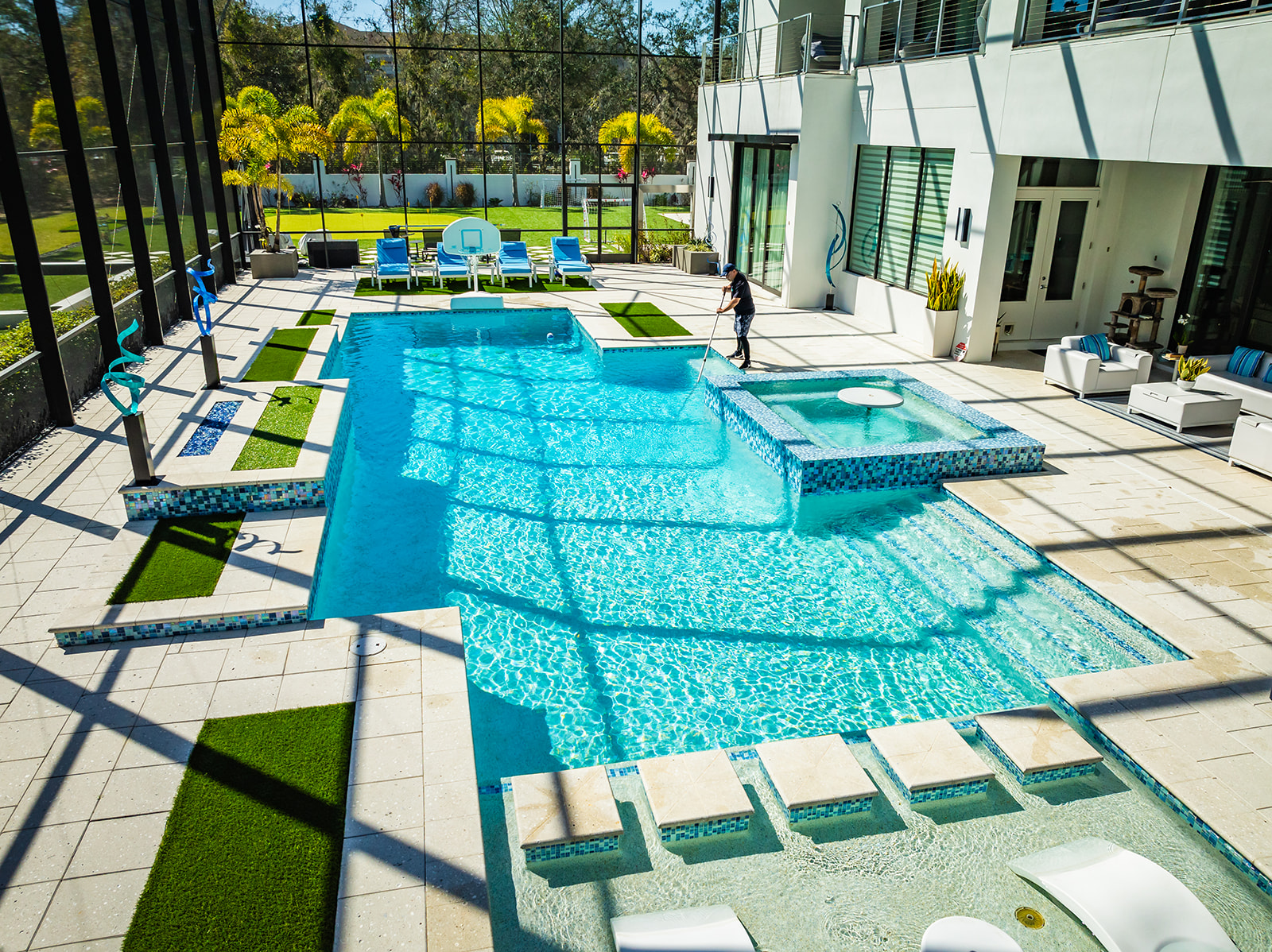
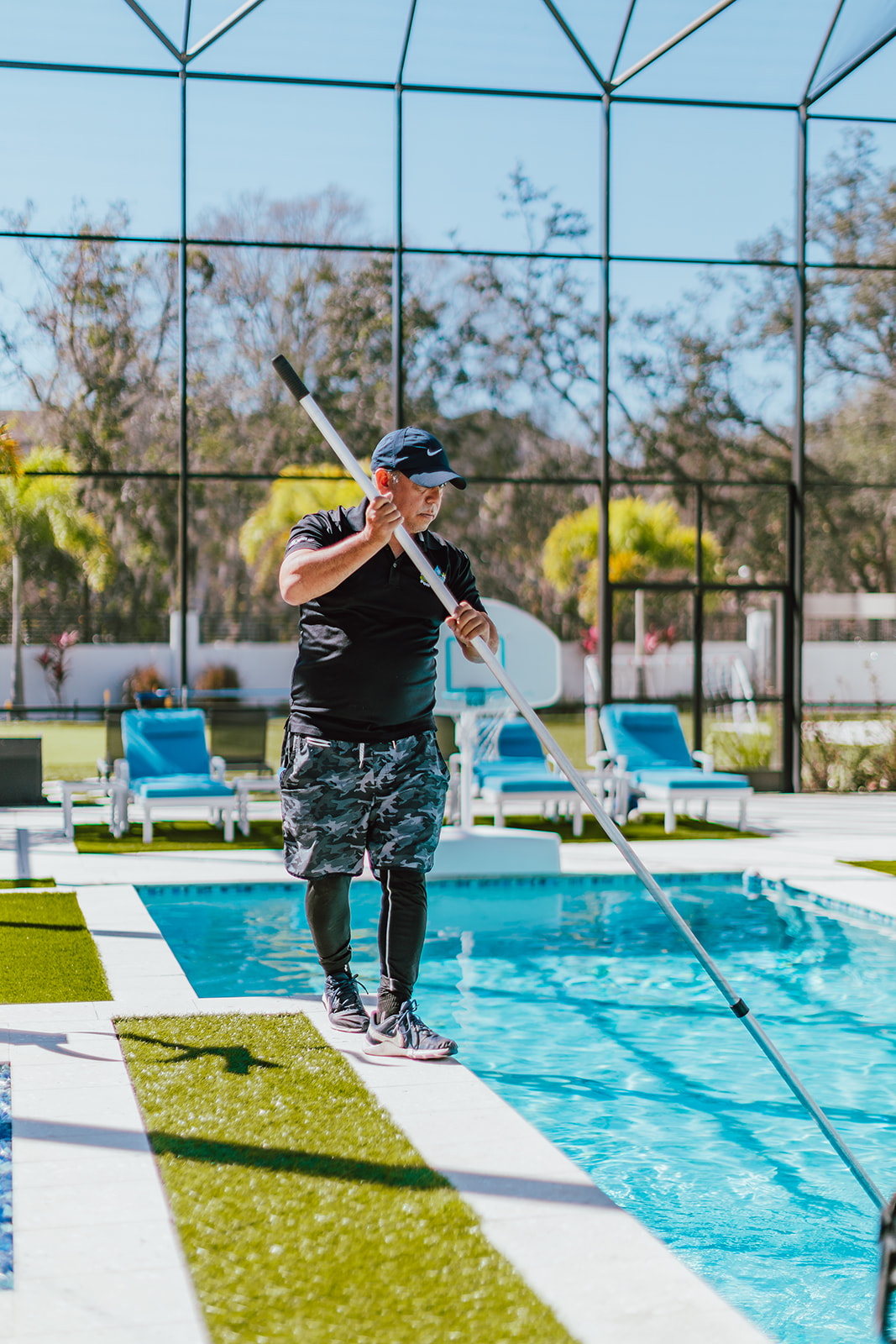
- Use pole and leaf skimmer
- Remove floating debris (leaves, insects, pollen)
- Skim entire surface systematically
- Empty skimmer into trash (not landscaping)
Why It Matters:
- Prevents debris from sinking and staining
- Reduces filter load
- Improves water circulation
- Keeps pool inviting
Central Florida Tip: Pollen season (spring) and love bug season (spring and fall) require extra skimming—sometimes twice daily.
Brushing Walls and Floor
What to Do:
- Use appropriate brush for your pool surface:
- Nylon brush: Vinyl, fiberglass, painted surfaces
- Stainless steel brush: Concrete, plaster (not vinyl!)
- Brush all walls, steps, and benches
- Brush behind ladders and in corners
- Brush floor toward main drain
- Pay special attention to shaded areas
Why It Matters:
- Prevents algae attachment
- Removes biofilm
- Prevents staining
- Keeps surfaces smooth
Brushing Pattern:
- Start at shallow end
- Work systematically to deep end
- Overlap strokes for complete coverage
- Brush waterline especially well
Tuesday: Water Chemistry Testing
Time Required: 15-20 minutes
Test Parameters
Must Test:
- pH
- Free chlorine
- Total alkalinity
Should Test:
- Calcium hardness (weekly or monthly)
- Cyanuric acid (monthly)
- Phosphates (monthly)
Testing Process
Steps:
- Collect water sample at elbow depth
- Use fresh test kit or strips
- Follow kit instructions exactly
- Record results in maintenance log
- Compare to ideal ranges
Ideal Chemistry Ranges
- pH: 7.2-7.6
- Free Chlorine: 2-3 ppm
- Total Alkalinity: 80-120 ppm
- Calcium Hardness: 200-400 ppm
- Cyanuric Acid: 30-50 ppm
- Phosphates: Below 200 ppb
Record Keeping
Maintain Log With:
- Date of test
- All chemical readings
- Adjustments made
- Pool conditions (clear, cloudy, etc.)
- Weather conditions
- Usage level
Why Logging Matters:
- Track trends over time
- Identify recurring problems
- Guide future adjustments
- Help professionals diagnose issues
Wednesday: Chemical Balancing
Time Required: 15-30 minutes
Adjustment Order
Follow This Sequence:
- Total alkalinity (if needed)
- pH (if needed)
- Calcium hardness (if needed)
- Chlorine (always)
Safety First
Before Handling Chemicals:
- Wear safety glasses
- Use chemical-resistant gloves
- Never mix chemicals
- Add chemicals to water, not vice versa
- Store chemicals safely
- Keep children and pets away
Common Adjustments
Lower pH (if above 7.6):
- Add muriatic acid or dry acid
- Amount: Follow product instructions for your pool size
- Pour slowly around pool perimeter
- Wait 4 hours before retesting
Raise pH (if below 7.2):
- Add soda ash (sodium carbonate)
- Amount: Follow product instructions
- Pre-dissolve in bucket
- Pour around perimeter
- Wait 4 hours before retesting
Raise Alkalinity (if below 80 ppm):
- Add sodium bicarbonate (baking soda)
- Amount: 1.5 lbs per 10,000 gallons raises by 10 ppm
- Pre-dissolve and add slowly
- Will also raise pH slightly
- Wait 4 hours before retesting
Adjust Chlorine:
- Add appropriate chlorine product
- Tablets, granular, or liquid
- Follow product dosing instructions
- Add in evening for best results
Thursday: Equipment Inspection
Time Required: 15-20 minutes
Pump Check
Inspect For:
- Unusual noises (grinding, squealing)
- Leaks around pump housing
- Proper pressure gauge reading
- Adequate water flow from returns
- Overheating
Normal Operation:
- Steady, consistent sound
- No visible leaks
- Pressure within normal range (check baseline)
- Strong flow from returns
- Pump warm but not hot
Filter System
Check:
- Filter pressure gauge reading
- Clean filter if pressure 8-10 psi above baseline
- Check for leaks
- Inspect multiport valve operation (if applicable)
Maintenance Actions:
- Backwash sand/DE filter if high pressure
- Clean cartridge filter if high pressure
- Check for damaged cartridges
- Clean filter housing area
Other Equipment
Inspect:
- Timers and automation systems
- Chlorinator or salt cell
- Heater (if applicable)
- Automatic pool cleaner
- Pool lights
- Valves and plumbing
Look For:
- Proper operation
- Unusual sounds or smells
- Visible damage
- Leaks or drips
- Error codes or warnings
Friday: Vacuum and Deep Clean
Time Required: 30-45 minutes
Vacuuming
Manual Vacuum:
- Attach vacuum head to pole
- Connect hose to vacuum head
- Submerge and fill hose with water
- Connect to skimmer
- Vacuum systematically floor and steps
- Overlap paths for complete coverage
- Empty pump basket afterward
Automatic Cleaner:
- Check hose condition
- Ensure proper operation
- Empty collection bag/basket
- Check for worn parts
- Allow to run recommended time
Robotic Cleaner:
- Place in pool
- Run programmed cycle
- Remove and empty basket
- Rinse filter
- Store properly
Deep Cleaning Tasks
Skimmer and Pump Baskets:
- Remove and empty
- Rinse thoroughly
- Check for cracks or damage
- Reinstall securely
Tile Line:
- Scrub with tile brush
- Use tile cleaner if needed
- Remove scum and buildup
- Prevents permanent staining
Deck and Coping:
- Sweep deck
- Hose down coping
- Remove debris from drains
- Check for trip hazards
Saturday: Shock Treatment (If Needed)
Time Required: 15 minutes + overnight circulation
When to Shock
Shock Your Pool If:
- Chlorine smell present
- Cloudy water
- After heavy use/pool party
- After significant rain
- Combined chlorine above 0.5 ppm
- As part of regular weekly routine (during summer)
Shocking Process
Steps:
- Test and balance pH to 7.2-7.4
- Calculate pool volume
- Determine shock amount needed
- Dissolve shock in bucket (if granular)
- Add slowly around pool perimeter (at dusk)
- Run pump overnight (8-12 hours minimum)
- Brush pool in morning
- Test chlorine before swimming
Shock Types:
- Calcium hypochlorite: Most common
- Dichlor: Won't raise calcium
- Liquid chlorine: Convenient
- Non-chlorine: Can swim immediately
Amount:
- Regular maintenance shock: 1 lb per 10,000 gallons
- Heavy use shock: 2 lbs per 10,000 gallons
- Problem shock: 3+ lbs per 10,000 gallons
Sunday: Final Inspection and Prep
Time Required: 10-15 minutes
Final Check
Verify:
- Water is clear and inviting
- Equipment running properly
- Chemicals in acceptable ranges
- Pool ready for week ahead
- Safety equipment accessible
Weekly Planning
Prepare For Coming Week:
- Note chemical needs
- Schedule any repairs
- Plan for heavy use days
- Check weather forecast
- Review past week's log
Stock Check
Verify Adequate Supply Of:
- Chlorine tablets or liquid
- pH adjusters (acid, soda ash)
- Shock treatment
- Test kit reagents
- Cleaning supplies
Monthly Tasks (Add to Weekly Routine)
Once Per Month
Deep Filter Cleaning:
- Cartridge filter: Remove and deep clean or replace
- Sand filter: Complete backwash cycle
- DE filter: Backwash and add fresh DE
Comprehensive Water Analysis:
- Take sample to pool store for full analysis
- Test for metals, phosphates, salt (if applicable)
- Verify home test kit accuracy
Equipment Inspection:
- Thorough pump inspection
- Check all connections and fittings
- Lubricate O-rings
- Test automation functions
Surface Inspection:
- Look for cracks or damage
- Check tile condition
- Inspect coping integrity
- Note needed repairs
Seasonal Adjustments for Central Florida
Summer (June-September)
Extra Attention Needed:
- Daily skimming (pollen, insects, debris)
- Test chemicals 3x weekly
- Shock weekly
- Run pump 10-12 hours daily
- Monitor chlorine closely (UV depletion)
- Clean filter more frequently
Why:
- Heavy use
- Intense UV exposure
- Frequent afternoon storms
- Higher temperatures
- More swimmers
Fall (October-November)
Adjustments:
- Manage falling leaves
- Reduce pump time to 8-10 hours
- Continue weekly routine
- Monitor for algae as temps cool
- Prepare for occasional cold snaps
Winter (December-February)
Modified Routine:
- Reduce circulation to 6-8 hours
- Continue weekly testing
- Maintain chlorine levels
- Reduce shock frequency
- Monitor for rare freeze events
Don't Skip:
- Weekly chemical testing
- Regular skimming
- Equipment inspection
- Circulation and filtration
Spring (April-May)
Preparation:
- Increase circulation time
- Manage pollen overload
- Shock more frequently
- Deep clean filter
- Prepare for summer season
Time-Saving Tips
Efficiency Strategies
1. Establish Routine:
- Same day/time each week
- Systematic approach
- Keep supplies organized
- Maintain log for quick reference
2. Invest in Quality Tools:
- Long-lasting equipment
- Efficient cleaners
- Reliable test kits
- Proper storage
3. Automate What You Can:
- Automatic cleaner
- Chemical feeder
- Timer for pump
- Salt chlorinator
4. Stay Ahead of Problems:
- Address issues immediately
- Don't skip weeks
- Test regularly
- Maintain equipment
When to Call a Professional
DIY vs. Professional Service
Consider Professional Service If:
- Don't have 1-2 hours weekly
- Uncomfortable with chemicals
- Recurring problems
- Equipment issues
- Water won't balance
- Time is more valuable than cost
Professional Service Includes:
- All weekly tasks
- Expert chemical management
- Equipment inspection
- Problem diagnosis
- Time savings
Cost: $100-$200 monthly vs. 50-100 hours annually for DIY
Troubleshooting Common Issues
Cloudy Water
Quick Fixes:
- Test and balance chemistry
- Shock pool
- Clean filter
- Run pump 24 hours
Green Tint
Action Plan:
- Test chlorine immediately
- Shock heavily (2-3x normal)
- Brush entire pool
- Run filter continuously
- Retest and adjust
Algae Starting
Immediate Response:
- Brush affected areas
- Shock pool
- Add algaecide
- Run pump 24 hours
- Vacuum to waste if possible
Equipment Not Working
First Steps:
- Check breaker
- Verify timer setting
- Inspect for obvious issues
- Call professional if unclear
Maintenance Log Template
Create Weekly Log
Record Each Week:
- Date and time
- Weather conditions
- Pool usage level
- Chemical test results
- Adjustments made
- Equipment status
- Issues noted
- Actions taken
- Supplies needed
Why Logging Matters:
- Track trends
- Identify patterns
- Guide adjustments
- Help professionals
- Protect investment
The Bottom Line
Consistency Is Key
Weekly maintenance prevents:
- Emergency repairs
- Expensive problems
- Green pool nightmares
- Equipment failure
- Unsafe conditions
Weekly maintenance ensures:
- Crystal-clear water
- Safe swimming
- Extended equipment life
- Lower costs
- Property value
Conclusion
Following this weekly checklist keeps your Central Florida pool perfect year-round. Whether you DIY or hire professionals, consistency is the key to pool perfection.
Prefer professional pool maintenance? Contact Central Florida Pool & Spa at (863) 353-6873. We handle all weekly maintenance tasks, so you can spend time swimming instead of cleaning. Serving Osceola, Orange, and Polk Counties with reliable, expert pool care.
Our weekly service includes:
- Complete surface cleaning
- Professional water testing
- Expert chemical balancing
- Thorough equipment inspection
- Detailed service reports
Enjoy your pool. Leave the maintenance to us.
Need Professional Pool Service?
Let Central Florida Pool & Spa handle all your pool maintenance, repairs, and upgrades. Serving Osceola, Orange, and Polk Counties.
Related Articles
Why Is My Pool Green? Causes, Solutions & Prevention
Green pool water? Learn the common causes, step-by-step solutions, and how to prevent it from happening again. Get your pool sparkling clear fast.
Cloudy Pool Water: Causes and How to Fix It Fast
Cloudy or milky pool water? Learn the causes and step-by-step solutions to restore crystal clear water. Quick fixes for common cloudiness issues.
Pool Chemistry 101: Understanding Your Pool Water Balance
Master pool water chemistry with this complete guide for Central Florida pool owners. Learn how to test, balance, and maintain perfect pool water.